
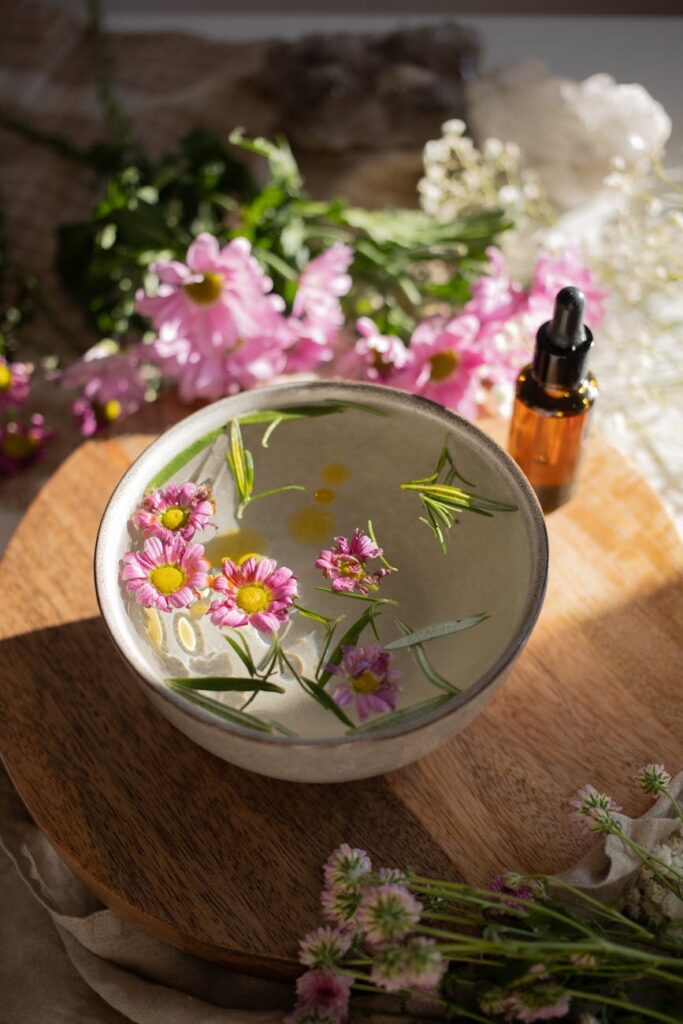
Aromatherapy Uses of Floral Hydrosols for Scalp Care
Introduction
Aromatherapy has gained recognition for its holistic approach to wellness, utilizing the therapeutic properties of essential oils and their derivatives. Among these derivatives, floral hydrosols have emerged as a gentle yet effective option for scalp care. Often overlooked, these aromatic waters are the by-products of essential oil distillation, retaining many of the beneficial properties of the original plant material. This article explores the uses, benefits, and applications of floral hydrosols specifically for scalp care.
What Are Floral Hydrosols for Scalp Care?
Floral hydrosols, also known as flower waters or distillates, are created during the steam distillation process of essential oils. When plant materials, such as flowers or leaves, are steamed, the essential oils rise with the steam. Upon cooling, the vapor condenses back into liquid, separating into two components: the essential oil and the hydrosol. The hydrosol contains water-soluble components of the plant, which can include aromatic compounds, phytochemicals, and trace amounts of essential oils.
For scalp care, floral hydrosols are particularly valuable because they are milder and safer for direct application on the skin compared to concentrated essential oils. With a pH level that is often compatible with the scalp’s natural environment, they serve as excellent natural remedies for various scalp concerns.
Key Benefits and Properties
Floral hydrosols are known for their diverse properties that can benefit scalp health:
1. Hydration: Many floral hydrosols, such as rose or lavender, provide moisture to the scalp, helping to alleviate dryness and flakiness.
2. Soothing: Hydrosols like chamomile and calendula are well-regarded for their calming effects, making them suitable for irritated or inflamed skin.
3. Antimicrobial Properties: Some floral hydrosols possess natural antimicrobial properties that can help maintain a healthy scalp environment by reducing unwanted bacteria and fungi.
4. Balancing: Hydrosols such as witch hazel can help regulate oil production, making them suitable for both oily and dry scalps.
5. Aromatic Benefits: The pleasant scents of floral hydrosols can also enhance the overall experience of scalp care, providing a sensory element that promotes relaxation.
Common Uses
Floral hydrosols can be used in various ways to promote scalp health:
1. Scalp Mist: A simple scalp mist can be created by pouring the hydrosol into a spray bottle. This can be applied directly to the scalp for instant hydration and refreshment.
2. Hair Rinse: After shampooing, floral hydrosols can be used as a final rinse to add shine and softness to the hair while also benefiting the scalp.
3. Massage Oil: Mixing floral hydrosols with carrier oils can create a soothing scalp massage oil. This can enhance circulation and promote relaxation.
4. Hair Styling: Some floral hydrosols, like rose, can act as a natural hair styling aid, adding a light scent and moisture without weighing hair down.
5. Soothing Compress: For irritated or inflamed scalps, a compress soaked in a floral hydrosol can provide instant relief.
Aromatherapy Applications
Floral hydrosols can be utilized in various aromatherapy practices to support scalp health:
1. Diffusion: Although hydrosols are not typically used in diffusers, they can be sprayed around the area or on hair to enjoy their aromatic benefits. Their lighter scent can provide a subtle yet pleasant atmosphere.
2. Bathing Rituals: Adding floral hydrosols to bathwater can create an aromatic experience that not only soothes the scalp but the entire body.
3. DIY Hair Care Products: Floral hydrosols can be incorporated into homemade shampoos, conditioners, or hair masks, enhancing the efficacy of the products while adding a delightful scent.
4. Meditation and Relaxation: Incorporating floral hydrosols into meditation or relaxation practices can enhance the overall experience, providing calming aromas that support mental clarity and tranquility.
Safety Considerations
While floral hydrosols are generally considered safe for topical use, it is prudent to adhere to certain safety precautions:
1. Patch Test: Before applying a new hydrosol to the scalp, conduct a patch test on a small area of skin to check for any allergic reactions or sensitivities.
2. Avoid Eye Contact: As with any topical product, avoid contact with the eyes. If exposure occurs, rinse thoroughly with water.
3. Consultation: Individuals with specific scalp conditions or those who are pregnant or nursing should consult with a healthcare professional before using floral hydrosols.
4. Purity: Ensure that the hydrosol is of high quality and free from additives or preservatives that could irritate the scalp.
Storage and Shelf Life
Proper storage of floral hydrosols is crucial to maintain their efficacy:
1. Cool, Dark Place: Store hydrosols in a cool, dark environment, ideally in a refrigerator, to prolong their shelf life.
2. Amber or Blue Glass Bottles: These containers protect the hydrosols from light degradation, further extending their longevity.
3. Shelf Life: Typically, floral hydrosols have a shelf life of 6 months to 1 year. Always check for signs of spoilage, such as changes in color, scent, or consistency.
Frequently Asked Questions
1. Can floral hydrosols be used daily on the scalp?
Yes, floral hydrosols can generally be used daily. They are gentle and hydrating, making them suitable for regular application.
2. Are floral hydrosols safe for all hair types?
Floral hydrosols are typically safe for all hair types. However, individuals with specific hair or scalp conditions should consider personal sensitivities.
3. How do I choose the right floral hydrosol for my scalp care needs?
Selecting the right floral hydrosol depends on your specific needs. For dryness, consider rose or chamomile; for oiliness, witch hazel may be beneficial. Always consider your scalp condition when making a choice.
4. Can I mix different floral hydrosols together?
Yes, many people enjoy blending different floral hydrosols to create unique aromas and benefits. Just ensure that the combinations are compatible with your scalp type.
5. Is it necessary to dilute floral hydrosols before use?
Floral hydrosols are generally safe for direct application. However, if you have particularly sensitive skin, diluting them with water or a carrier oil may be beneficial.
Conclusion
Floral hydrosols offer a versatile and gentle approach to scalp care, enriching the experience of aromatherapy with their hydrating, soothing, and balancing properties. Their myriad applications—from scalp mists to DIY hair care products—make them a valuable addition to any wellness routine. By understanding the benefits and safe usage of floral hydrosols, individuals can harness the power of nature to promote a healthy scalp and enjoyable hair care experience.