
History and Origins of Aromatherapy for Meditation and Mindfulness Blends
Introduction
Aromatherapy is an age-old practice that harnesses the therapeutic properties of essential oils for physical, emotional, and spiritual well-being. Among its many applications, aromatherapy has gained prominence in promoting meditation and mindfulness, offering practitioners tools to enhance their experiences. This article explores the rich history and origins of aromatherapy, particularly in the context of meditation and mindfulness blends, while also delving into their benefits, uses, and practical applications.
What Is Aromatherapy for Meditation and Mindfulness Blends?
Aromatherapy involves the use of aromatic plant extracts, known as essential oils, to enhance physical and psychological health. The practice of using these oils for meditation and mindfulness focuses on creating a calming atmosphere conducive to introspection, relaxation, and heightened awareness.
Meditation often involves techniques that promote mindfulness—an active, open attention to the present moment. Aromatherapy complements these practices by stimulating the senses, thereby fostering a deeper connection to oneself and the environment. Essential oils like lavender, frankincense, and sandalwood are commonly favored for their soothing and grounding properties.
Key Benefits and Properties
The benefits of aromatherapy for meditation and mindfulness are manifold:
1. Enhanced Relaxation: Many essential oils have properties that promote relaxation. Oils like chamomile and bergamot are well-known for their calming effects, helping to alleviate stress and anxiety.
2. Improved Focus: Certain oils, such as rosemary and peppermint, are believed to enhance concentration and cognitive clarity. These can be particularly beneficial during meditation sessions that require sustained attention.
3. Mood Elevation: Essential oils can influence emotional well-being. Citrus oils like orange and lemon are often uplifting, helping to create a more positive atmosphere.
4. Spiritual Grounding: Oils such as sandalwood and patchouli are traditionally associated with spiritual practices, aiding in grounding and deeper meditative states.
5. Enhanced Breathing: Some essential oils, like eucalyptus and tea tree, can facilitate easier breathing, which is essential during meditation practices that focus on breath control.
Common Uses
Aromatherapy for meditation and mindfulness can be applied in various ways:
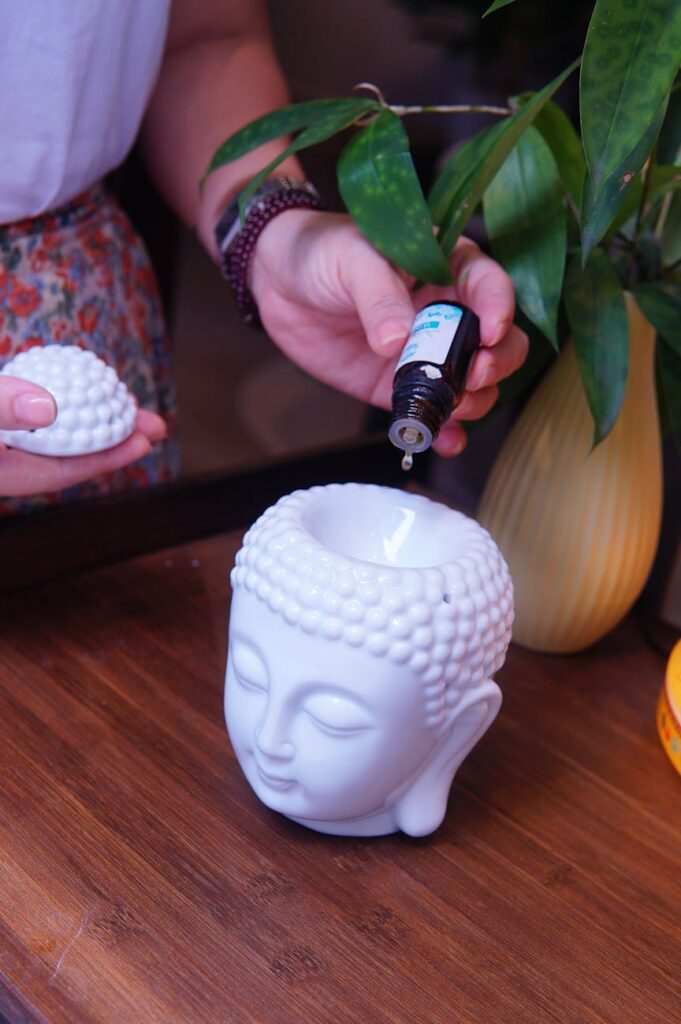
- Diffusion: Using an essential oil diffuser to disperse oils into the air creates a fragrant environment that can enhance meditation practices.
- Topical Application: Diluted essential oils can be applied to pulse points, such as wrists and temples, allowing for the benefits to be inhaled and absorbed through the skin.
- Bathing: Adding essential oils to bathwater can create a serene environment conducive to mindfulness and relaxation.
- Inhalation: Simply inhaling essential oils directly from the bottle or from a cotton ball can be an effective way to experience their benefits quickly.
- Meditation Accessories: Items like candles infused with essential oils or meditation cushions sprayed with calming blends can also enhance the experience.
- Calming Blend: Lavender, chamomile, and ylang-ylang for relaxation.
- Focus Blend: Rosemary, basil, and peppermint for enhanced concentration.
- Grounding Blend: Frankincense, cedarwood, and sandalwood for spiritual connection.
- Containers: Essential oils should be stored in dark glass containers to protect them from light, which can degrade their quality.
- Temperature: Ideally, oils should be kept in a cool, dark place, away from direct sunlight and heat sources.
- Shelf Life: Most essential oils have a shelf life of 1-5 years, depending on the oil. Citrus oils tend to have shorter shelf lives, while oils like patchouli can last longer. Regularly check for changes in aroma or consistency, as these may indicate that an oil has gone bad.
Aromatherapy Applications
The application of essential oils for meditation and mindfulness can take various forms. Here are some common methods:
1. Essential Oil Blends
Creating specific blends tailored to meditation can enhance the experience. Common blends include:
2. Massage and Body Oils
Incorporating essential oils into massage oils can promote relaxation and mindfulness through the physical sensation of touch, combined with the aromatic benefits.
3. Meditation Spaces
Designating a space for meditation can be enhanced by incorporating aromatherapy. Utilizing diffusers, scented candles, or incense can create a tranquil environment that supports mindfulness.
4. Breathing Exercises
Inhaling essential oils during specific breathing exercises can deepen the experience. For instance, combining slow, deep breaths with inhalation of calming oils can reinforce relaxation.
Safety Considerations
While aromatherapy is generally safe, it is essential to approach it with care:
1. Dilution: Essential oils are potent and should be diluted with a carrier oil before topical application to avoid skin irritation.
2. Skin Sensitivity: Conduct a patch test before using a new oil to ensure no adverse reactions occur.
3. Quality: Use high-quality essential oils, preferably organic and free from synthetic additives. This helps to ensure that you receive the full benefits without harmful contaminants.
4. Pregnancy and Health Conditions: Certain essential oils may not be suitable for pregnant individuals or those with specific health conditions. It is advisable to consult a qualified practitioner for personalized guidance.
5. Ventilation: When diffusing essential oils, ensure that the space is well-ventilated to avoid overwhelming scents.
Storage and Shelf Life
Proper storage of essential oils is crucial for maintaining their efficacy:
Frequently Asked Questions
1. Can anyone practice aromatherapy for meditation?
Yes, aromatherapy can be practiced by anyone interested in enhancing their meditation or mindfulness experiences. However, individuals with specific health concerns should consult a healthcare professional prior to starting.
2. What essential oils are best for beginners?
For beginners, oils such as lavender, peppermint, and eucalyptus are excellent choices due to their accessibility and popular calming or invigorating properties.
3. How do I choose the right essential oil for my needs?
Choosing the right essential oil involves understanding your personal preferences and desired outcomes. Consider what aspects of your meditation practice you wish to enhance—whether relaxation, focus, or spiritual grounding—and select oils accordingly.
4. Is it safe to use essential oils around pets?
Some essential oils can be harmful to pets. It is essential to research the safety of specific oils before using them in environments with animals. Always consult a veterinarian if unsure.
5. Can I use essential oils in conjunction with other therapies?
Aromatherapy can complement other therapies, including yoga, massage, and psychotherapy. However, it’s advisable to discuss this with your therapist or healthcare provider to ensure compatibility.
Conclusion
The history of aromatherapy is as rich and diverse as the essential oils themselves. With roots dating back to ancient civilizations, this practice has evolved into a valuable tool for enhancing meditation and mindfulness. By understanding the properties, applications, and safety considerations of essential oils, individuals can create personal experiences that deepen their connection to themselves and the present moment. Whether through diffusion, topical application, or dedicated meditation spaces, the integration of aromatherapy into mindfulness practices offers a pathway to tranquility and self-awareness.